Skip to content

Information on purchasing cargo bikes and trailers for businesses

Here you will find further important tips and information on purchasing cargo bikes and bike trailers for your business.

Purchase and financing

Commercial cargo bikes and trailers offer a cost-effective alternative to conventional transport vehicles. The purchase costs vary depending on the model and equipment, but various financing options make it easier for companies to get started with sustainable mobility. Cargo bike dealers and manufacturers offer flexible financing models that can be adapted to operational needs.

What are the costs associated with commercial cargo bikes and what financing options are available?

Procurement and service

Once you have identified the right cargo bike or bike trailer for your business, you can start planning your purchase.

Buying a cargo bike: local bike shop vs. direct purchase from the manufacturer
Buying from a local bicycle dealer offers significant advantages for the subsequent maintenance and repair of your cargo bike. If your desired model is not available in the range, you can also order directly from the manufacturer. Direct sales are particularly common for heavy-duty cargo bikes. Important: Clarify the availability of service partners in your region in advance.

Service and maintenance: essential for commercial cargo bikes
Professional maintenance service is essential for businesses, as prolonged downtime can be critical to their operations. Commercial cargo bikes often have special components that differ significantly from standard bicycle parts and require specialist knowledge.

Cargo bike sharing: test before you buy
Be sure to take advantage of test ride opportunities at dealers, manufacturers or through cargo bike sharing schemes. Compare different models in terms of riding characteristics, load capacity and handling. Involve your employees in the selection process – they will be using the bikes on a daily basis and can contribute valuable practical experience.

Promotion

Federal funding
Funding programmes for the purchase of commercial cargo bikes are available in Germany at federal, state and local level. With its ‘E-cargo bike guideline’, the Federal Ministry for the Environment is continuing to fund the purchase of commercial cargo bikes and trailers through the Federal Office for Economic Affairs and Export Control (BAFA) until 30 June 2027. Private companies and public-law corporations/institutions are eligible to apply. The subsidy rate is 25%, with a maximum amount of €3,500.

Financing options for commercial cargo bikes

Commercial cargo bikes can be purchased through various financing options. In addition to traditional loans and hire purchase, specialised financing models offer tax advantages and flexible payment options.

Commercial cargo bike leasing
Cargo bike leasing for businesses is developing dynamically. Specialised leasing providers offer flexible 36-month contracts with attractive terms.

Tax benefits

  • Leasing instalments are tax-deductible as operating expenses
  • Input tax deduction with appropriate authorisation
  • No tying up of equity capital

Availability: Cargo bike dealers and manufacturers work together with leasing companies to create individual offers.

Important note: BAFA subsidies are not available for leasing.

Company bike leasing for cargo bikes

The tried-and-tested company bike model also works for commercial cargo bikes and offers considerable tax advantages.

How it works:

  • Framework agreement between company and leasing provider
  • Employee selects desired cargo bike
  • Financing via salary conversion (gross)
  • Only 0.5% of the list price as a monetary benefit

Savings: The actual cost is significantly reduced due to the elimination of taxes and social security contributions.

Restriction: Fixed employee assignment required – no pool vehicle use possible.

Financing for self-employed persons and small business owners


Tax depreciation:

  • For over 50% business use: full tax deduction.
  • Depreciation over 7 years.
  • Maintenance and repair costs as business expenses.

Additional options:

  • Company bike leasing also available for self-employed persons.
  • Can be combined with subsidy programmes.
  • Consultation with your local bicycle dealer recommended.

Dealer card

Look here for dealers and maintenance partners in your region.

Retailers

Cost-benefit analysis for commercial cargo bikes

Overview of acquisition and operating costs

Integrating cargo bikes and bike trailers into your company fleet is a strategic investment in sustainable mobility. Cargo bikes and trailers not only reduce CO2 emissions, but also lower operating costs in the long term compared to conventional transport vehicles. The lower acquisition and maintenance costs make commercial cargo bikes and trailers an economically attractive solution.

Detailed cost breakdown:
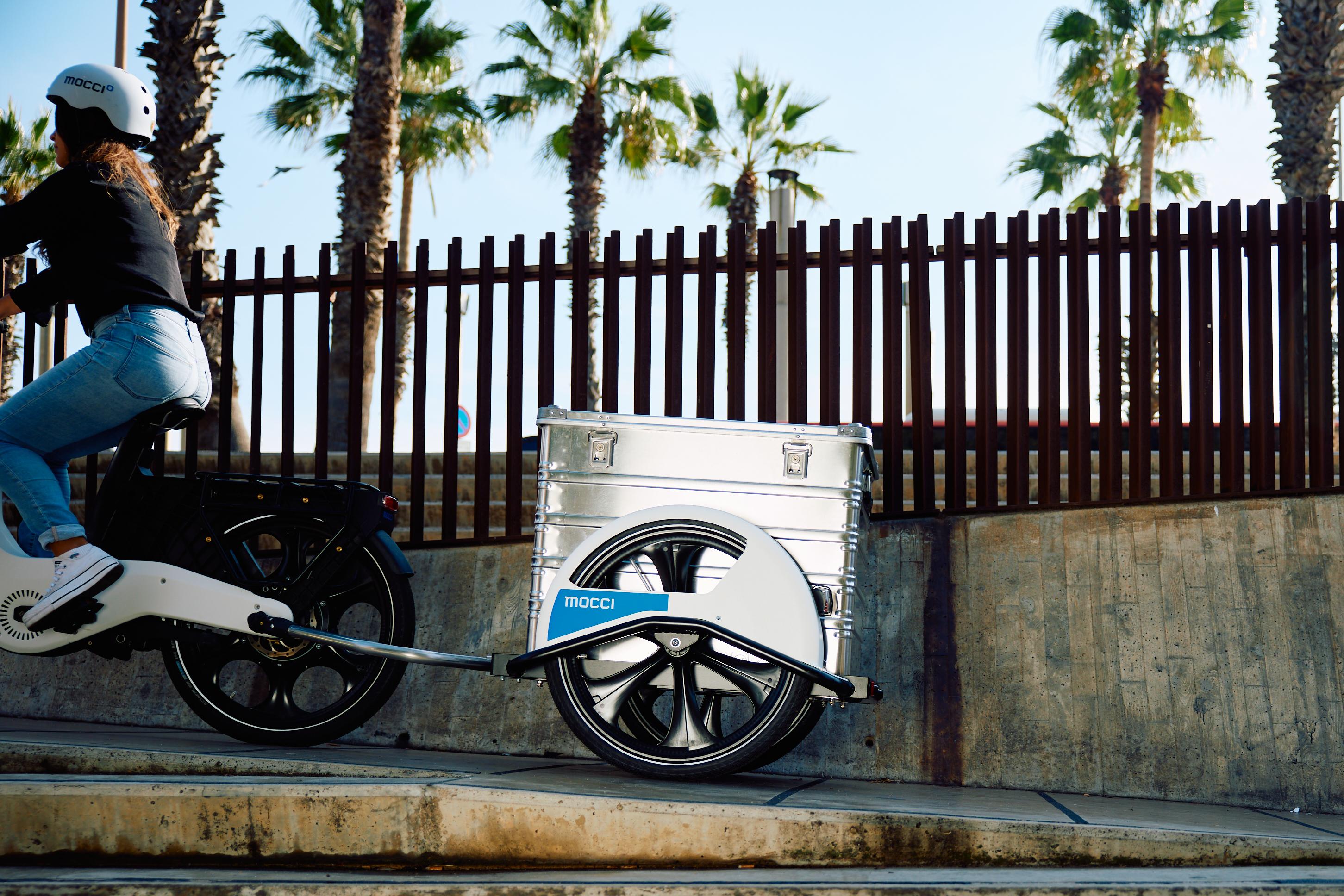
Acquisition costs: Professional cargo bikes for commercial use start at around £4,500 and vary depending on size, equipment and cargo bike type. Heavy-duty cargo bikes and specially equipped models may require a higher investment. Bicycle trailers are generally cheaper, but a suitable towing bike must also be available.

Energy costs (consumption): The operating costs of electric cargo bikes and e-bikes with trailers are significantly lower than those of diesel or petrol vehicles. Factors such as vehicle weight, driving behaviour, weather conditions and load influence power consumption.

Sample calculation: A battery with a capacity of 725 Wh (typical for Long John models) costs around 30 pence per full charge (including charging losses) at an electricity price of 30 pence/kWh. The average range is 50 km per battery charge, depending on the assistance level, load, topography and outside temperature.

Insurance costs: Commercial cargo bikes and e-bikes, including trailers, are often covered by existing business liability insurance. Additional insurance may be advisable depending on the area of application.

Maintenance and service costs: The maintenance costs for cargo bikes vary greatly depending on the intensity of use and operating conditions. As a rule, they do not exceed the maintenance costs of comparable motor vehicles and are often even lower.