Skip to content

Legal aspects and insurance

On this page, you will find all the necessary information regarding legal and insurance issues to consider when adding cargo bikes and trailers to your fleet.

Insurance

A dented rim, a road accident, external damage or even theft – no matter how robust your cargo bike is, you should insure yourself against such damage.

The good news is that cargo bikes are classified as bicycles and are therefore not subject to registration requirements. This means that liability issues are covered by public liability insurance. Separate comprehensive insurance policies can be taken out to cover vandalism or theft – but cargo bikes are no longer uncharted territory in vehicle fleets.

Various relevant insurance policies

Anyone adding a cargo bike to their company fleet should consider the following aspects with regard to insurance:

Business liability insurance

  • Damage caused by vehicles not subject to registration requirements with a maximum speed of 25 km/h is generally covered by public liability insurance. This applies to all company-ordered journeys for internal transport (e.g. journeys to orders or construction sites) and delivery transport (delivery of own products or purchases for the company). However, before the cargo bikes are put into operation, the insurer should be notified of their ownership and the type of use in the business, and their inclusion in the public liability insurance should be agreed.

Comprehensive insurance for cargo bikes

  • The insurance industry offers comprehensive insurance for commercially used cargo bikes. Depending on the scope of coverage agreed with the insurer, this insurance provides cover in the event of accident, damage or loss, among other things.
  • Most insurance companies require that cargo bikes be stored overnight in locked rooms or a locked courtyard. During the day, they must be secured with a certified security lock.
  • It may also be advisable to equip each bike with a GPS tracker (observe data protection regulations!). Check with your insurance company to see to what extent this can lead to a reduction in premiums.

Business contents insurance and cargo bikes:

  • If no comprehensive insurance covering operational risks is taken out, the value of cargo bikes should be reported to the business contents insurer and included in the contents insurance policy. This type of coverage may be suitable if the cargo bike is used exclusively on company premises. If a cargo bike is damaged or destroyed, for example by a fire at the business site, it is covered under the contents insurance policy.

Aspects of road traffic

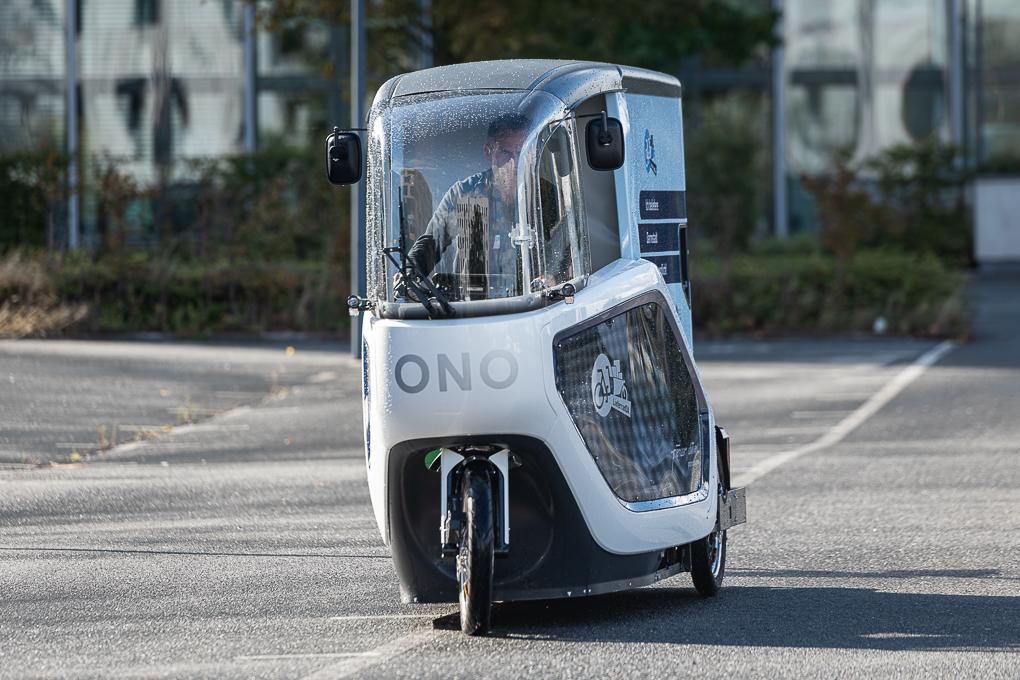
Cargo bikes with electric assistance up to 25 km/h are classified as bicycles and may be ridden on both roads and cycle paths. However, riding large cargo bikes on narrow and bumpy cycle paths can quickly become unreasonable. The following exemption (also for cycle paths that must be used) is therefore interesting:

As a rule, riders of other bicycles should not be penalised for not using the cycle path if the use of the cycle path is unreasonable under the circumstances of the individual case.

(Source : Allgemeine Verwaltungsvorschrift zur Straßenverkehrsordnung, VvW-StVO, Randnummer 23 zu § 2).

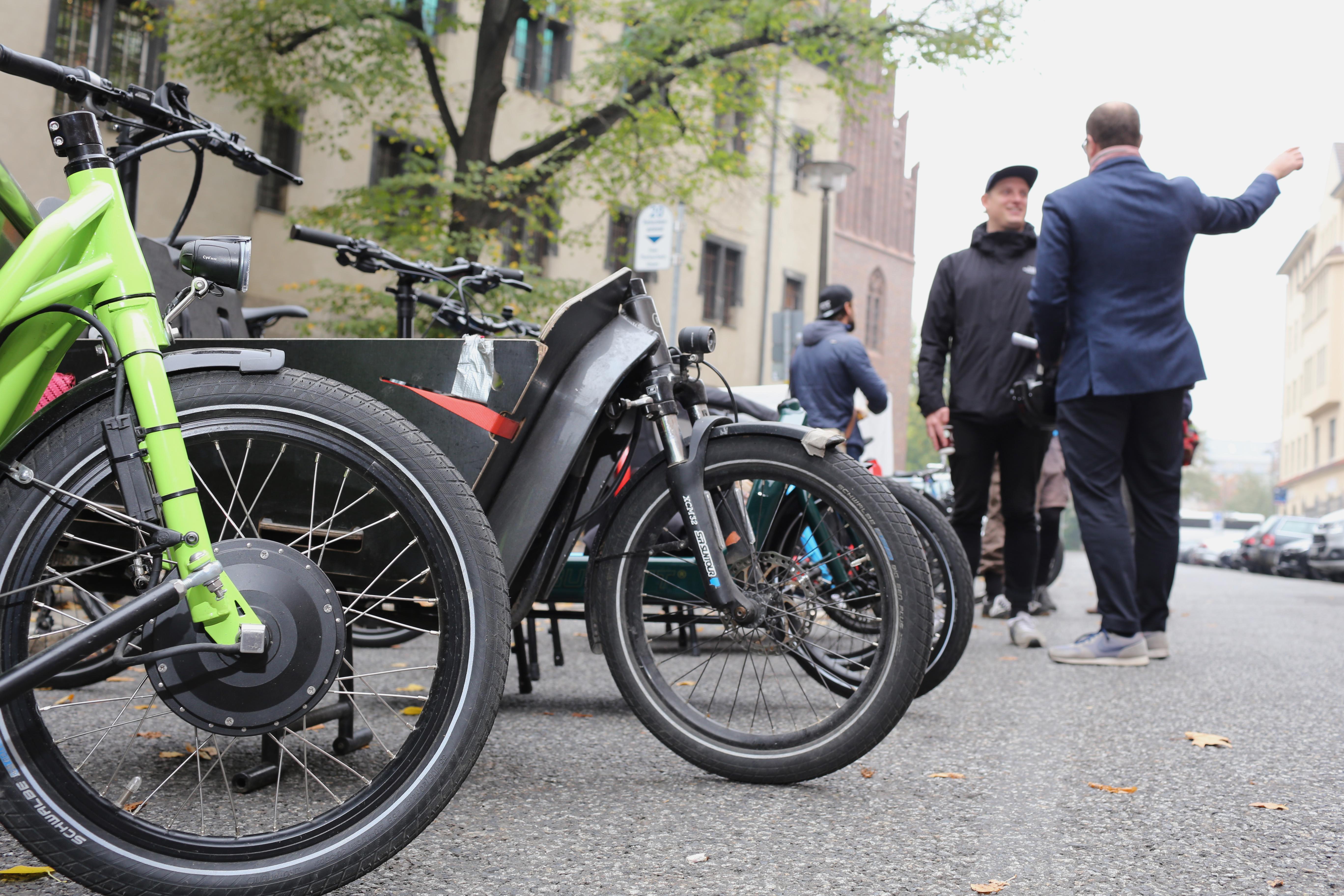
When it comes to parking, cargo bikes offer advantages over conventional delivery vehicles. On the one hand, you can use the parking facilities for motor vehicles: parking on the right-hand side of the road, in parking spaces belonging to the road (Section 12 (4) StVO) or delivering/loading in designated delivery zones. In addition, you may park your cargo bike on the pavement, provided that you do not obstruct anyone (pedestrians, people with prams, wheelchair users, etc., see also the Verhaltenskodex RLVD). Bicycle parking spaces can also be used. With the introduction of the supplementary sign 1010-69, designated cargo bike parking spaces are now available in some areas and reserved specifically for cargo bikes. In addition, the following applies:
 

  • Consideration for other road users
  • Park cargo bikes so that they cannot fall over or roll away.
  • Securely anchor the vehicle during longer periods of inactivity. Tip: Include information about parking in your communication and training with your employees.

General note

Cargo bikes are standardised by DIN 79010. This applies to cargo bikes with a permissible total weight of up to 250 kg. There is still a need for legal clarification on the question of how heavy-duty bikes are permanently classified.