Skip to content

Information on integrating cargo bikes and bike trailers into your fleet

What needs to be considered when introducing cargo bikes and trailers as vehicles in the company fleet?

Various factors must be taken into account when integrating cargo bikes and trailers into the company fleet. The successful introduction of cargo bikes or bikes with trailers begins with an analysis of existing transport tasks and the identification of suitable areas of application for sustainable transport solutions. This assessment is crucial for selecting suitable cargo bike and trailer models and for strategic fleet integration.

Changes to consider

  • Transport goods and journeys are shifted to cargo bikes or trailers. This changes the areas of application, delivery areas, routes, etc. of the existing vehicles in the fleet.
  • The use of cargo bikes or trailers allows you to plan more flexibly and use the vehicles in your fleet in a more targeted manner.
  • Delivery and operating areas may also change, as you will need to use conventional vehicles less frequently for journeys in the vicinity of the company location.
  • New business models may become possible.
    As cargo bikes and bicycle trailers can be ridden without a driving licence, you may be able to reorganise your personnel planning.


View of the vehicle fleet

The introduction of cargo bikes and trailers into the company fleet leads to strategic changes in vehicle use. While some journeys can be completely replaced, a combination of sustainable transport solutions and conventional vehicles often proves to be the best option. Companies should take a holistic view of all their transport needs, as the use of cargo bikes and trailers allows previously separate transport tasks to be combined efficiently. Intelligent journey bundling can reduce the number of trips and, ideally, the total number of vehicles in the fleet.

Adjustment of route planning

Restructuring delivery areas entails adjusting route planning. While cargo bikes and bike trailers are particularly suitable for inner-city areas, conventional vehicles can still be used in outlying areas. If you have delivery areas that are too far away from your own location but are still in a densely populated area, making the use of e-bikes a sensible option, it may be helpful to set up transhipment or handover points. Perhaps there is an opportunity to establish an intermediate warehouse in the area in question, which is supplied by a van, and in the vicinity of which one or more cargo bikes or bicycles with trailers are available for trips.

Staff planning

The use of cargo bikes and trailers offers the opportunity to involve employees without a driving licence in a different or more self-sufficient way. Whereas in the past it was necessary to plan lifts to work locations, you can now schedule the relevant employees independently. Discussions with companies that incorporate cargo bikes or bicycle trailers into their vehicle fleets show that hiring a new cargo bike driver can also be helpful – at least if there are significant reservations about using a bicycle. By hiring someone new, you can specifically find someone with experience and who enjoys cycling. But of course, hiring someone new should not be at the expense of existing employees.

Type of vehicle provision

When it comes to vehicle provision, companies have the choice between a pool vehicle model and personal allocation. Pool vehicles allow for flexible use and potentially higher utilisation, but require booking systems.
It is also important to consider whether company vehicles should be kept at the workplace so that employees can drive from the workplace in the morning and return to the workplace in the evening to return the company vehicle. Or whether the vehicles are taken home after work.
For the use of cargo bikes in the company, it may be easier if company vehicles remain on the premises – depending on how far employees have to travel and whether they have secure parking facilities on site. With bicycle trailers, this can be handled even more flexibly.

Promoting acceptance among employees

The success of integrating a cargo bike or bike trailer into everyday life depends on employee acceptance. Comprehensive training, information and good advance planning are key. You should allow time for this.

Training
Simply ‘putting out’ the cargo bike or trailer rarely works. If only because cargo bikes and bicycles with trailers ride differently than conventional bikes, there should be ample opportunity to try out the bike outside of work. Training events are a good way to do this. Such an event should be fun, but above all, you should ensure that participants receive a good introduction to how to ride the bikes and their technical aspects. It is very helpful to have a competent person on hand who knows the bike well, can explain its special features and is present during the test ride.

Ambassadors
Identify in advance who is interested in using the bikes or already has previous experience. It is advisable to involve such employees as ambassadors – if they set an example by using the bikes themselves, they can help to reduce any reservations others may have. Employees who have previously driven a car for work and show no interest in using the bikes can sometimes be more difficult to convince. To do this, you need role models and good examples within the company – and a little time to enable continuous test rides.
If possible, a new driver can be hired for the e-bike. You can then look for someone who is enthusiastic about using the new vehicle in everyday business life and who can convey this enthusiasm to the workforce.

Information
Good communication is very important. Approach your employees before implementing the e-bikes. Highlight the advantages of using them: time savings and less stress in traffic because you can use the cycle path, avoid traffic jams, easier parking, health benefits and contribution to environmental protection. In addition, you can establish further incentive systems, such as a company challenge. It is also helpful to share success stories with employees.
And very importantly, get regular feedback from your employees and respond to it.
Vehicle equipment is crucial!

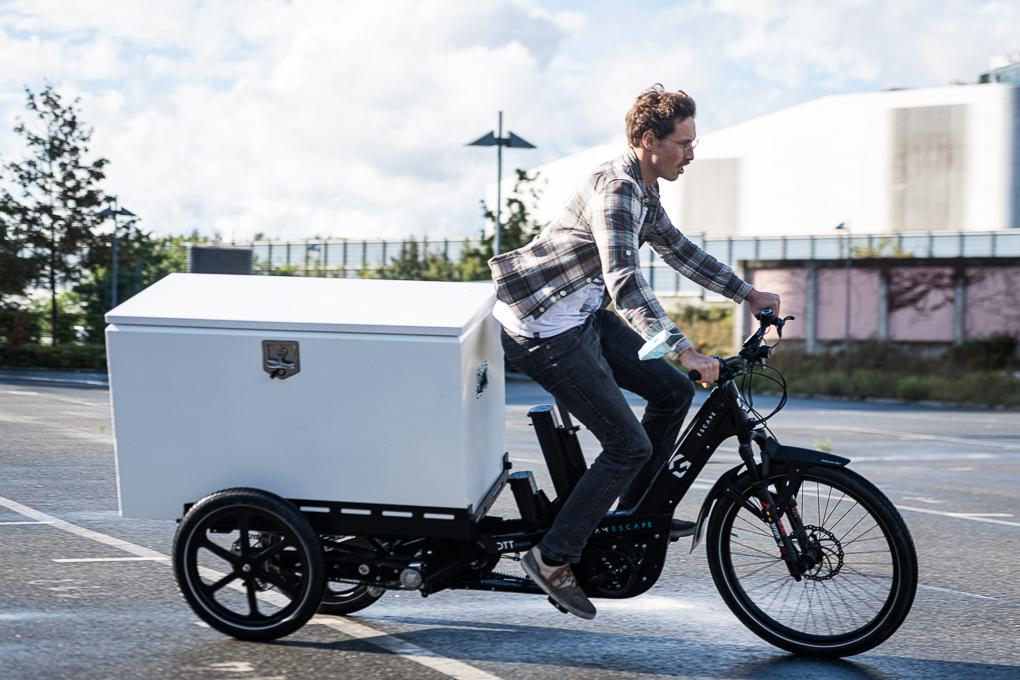
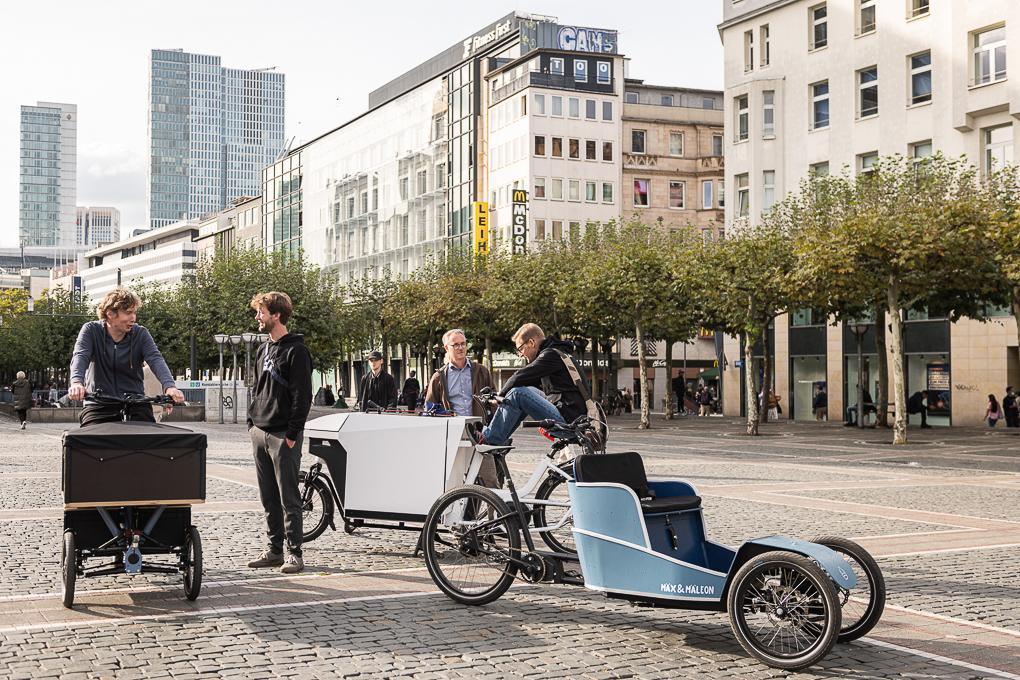
The equipment strategy is crucial for successful fleet integration: whether cargo bikes or trailers are used as service vehicles with basic equipment or loaded flexibly as required has a significant impact on employees' willingness to use them. The selection of configurations, fittings and load securing for cargo bikes today is almost as diverse as that for normal transporters and enables a needs-based configuration for every area of application within the company.

Information on configurations