Delta trikes can carry heavy loads. With their design – one front wheel and two rear wheels – they offer maximum load capacity and are specially designed for demanding transport tasks. The smaller models in this range are more manoeuvrable and take up less space. They are particularly suitable for transport in densely populated areas and narrow streets.
Small-delta trike

High demand for city centre-journeys
Construction and steering
Delta trikes are steered via the front wheel, just like a normal bicycle. However, the fork, headset, stem and handlebars – especially on larger models – must be designed to withstand significantly higher loads, as they have to steer the entire vehicle.
Drive and technology
The drive is usually via the rear axle and is transmitted to both wheels via a differential. There are two types of construction:
- Models with a continuous axle
- Models with individually mounted rear wheels: Allow for a larger and lower loading area
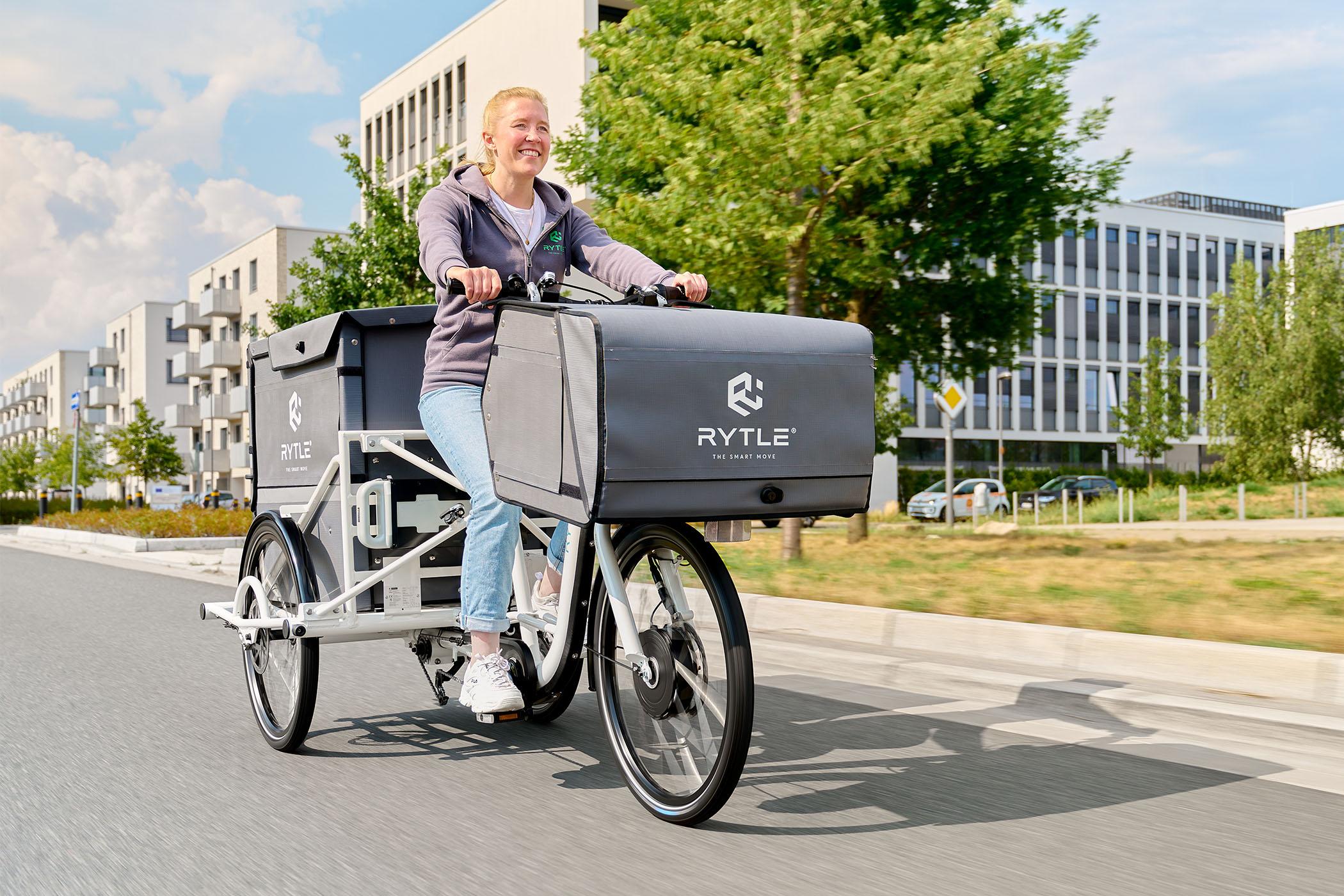
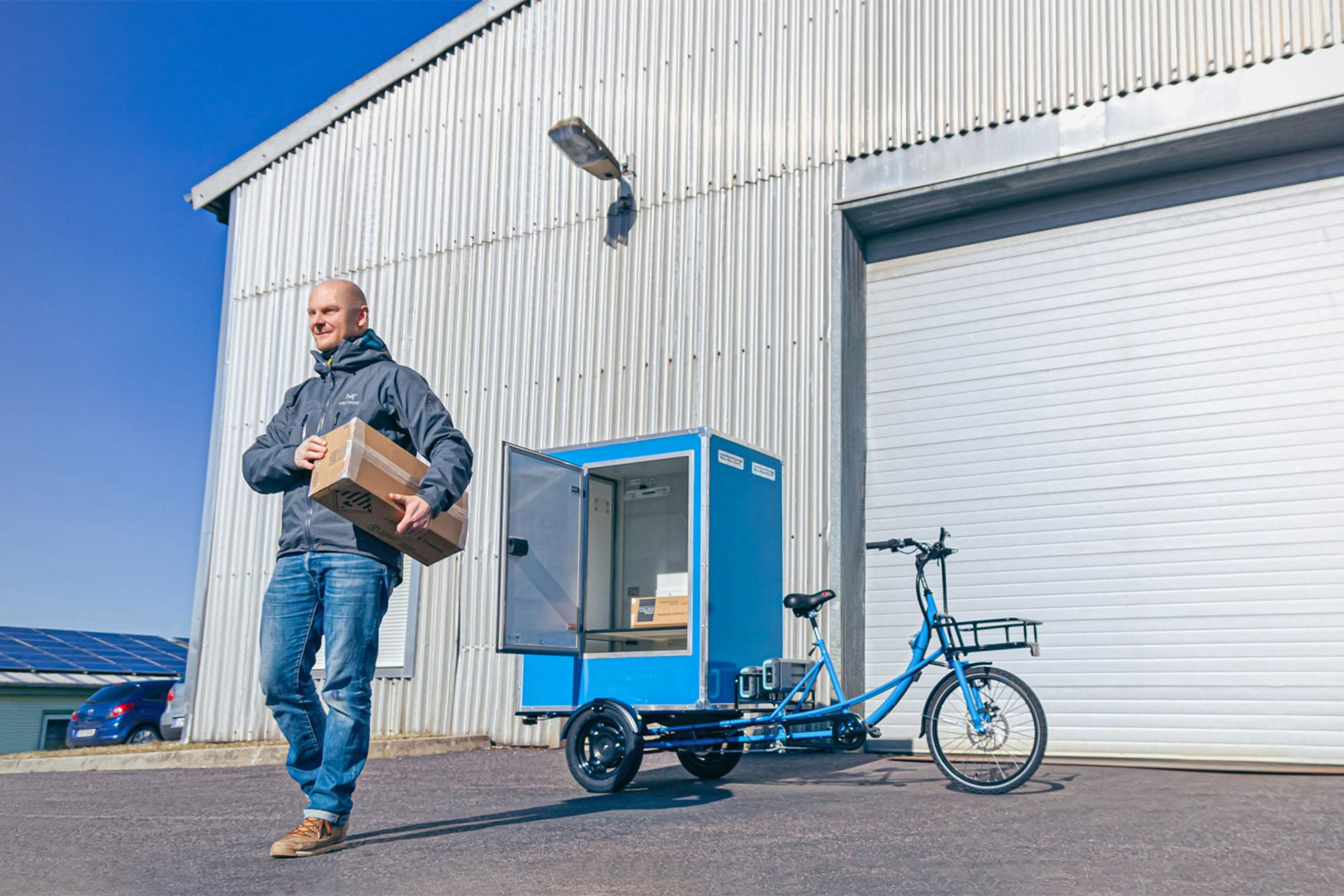
Exceptional payload capacity
Delta tricycles have relatively high payload capacities and can easily transport heavy loads. A key advantage is that the weight on the rear axle does not need to be balanced, which ensures driving stability even when fully loaded.
Loading area and superstructures
As the loading area is not in the direct field of vision of the driver, tall box bodies can be mounted without any problems. This opens up completely new possibilities for:
- Closed transport boxes
- Refrigerated bodies
- Special workshop bodies
- Mobile sales stands with large presentation areas
Small Delta tricycles are the first choice for companies with high transport requirements that need maximum load capacity and professional mounting options, but have to navigate their routes on narrow streets in particular.